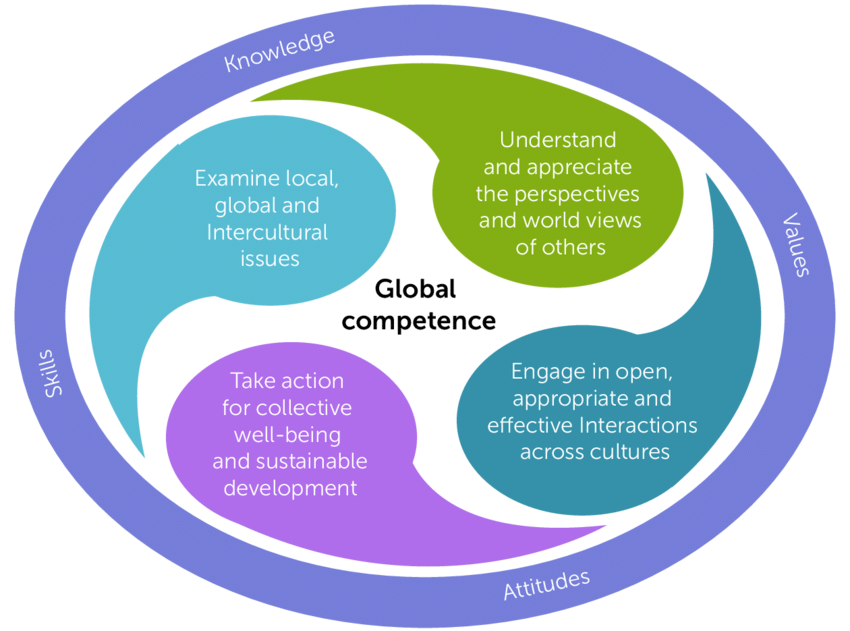
Global competence in education refers to the ability of students to understand and navigate the complexities of an increasingly interconnected world. From a global perspective, it involves developing the knowledge, skills, and attitudes necessary to engage with diverse cultures, economies, and societies. Educators can foster global competence by incorporating global issues, perspectives, and case studies into the curriculum, and providing opportunities for students to interact with peers from different countries and backgrounds. By doing so, students can develop a deeper understanding of global challenges, such as sustainability, inequality, and social justice, and become active, informed, and empathetic global citizens.
Tags
#Global
Topic
Belonging in a Global Community
Resource
Resource link, image
Summary
Radical Belonging and Bridging is a concept that offers a path forward for societies in crisis by fostering a sense of deep connection and community among individuals from diverse backgrounds. It involves creating spaces where people can come together, share their stories, and build relationships across differences, rather than trying to fit into predetermined categories or identities. By bridging the gaps between individuals and groups, Radical Belonging and Bridging aims to break down barriers, promote empathy and understanding, and create a sense of shared humanity, ultimately leading to more inclusive, equitable, and just societies.