Topic
From Landmark College, video about the four domains of learning.
Resource
Summary
The four domains of learning—cognitive, affective, psychomotor, and social—represent a comprehensive framework for understanding how individuals acquire knowledge and skills. The cognitive domain focuses on mental skills and knowledge acquisition, emphasizing critical thinking and problem-solving. The affective domain addresses emotions, attitudes, and values, highlighting the importance of motivation and personal growth. The psychomotor domain involves physical skills and coordination, emphasizing hands-on learning and the development of motor abilities. Lastly, the social domain encompasses interpersonal skills and collaboration, underscoring the significance of communication and teamwork in the learning process. Together, these domains provide a holistic approach to education, recognizing the diverse ways in which individuals learn and grow.
Tags
#domains of learning
Topic
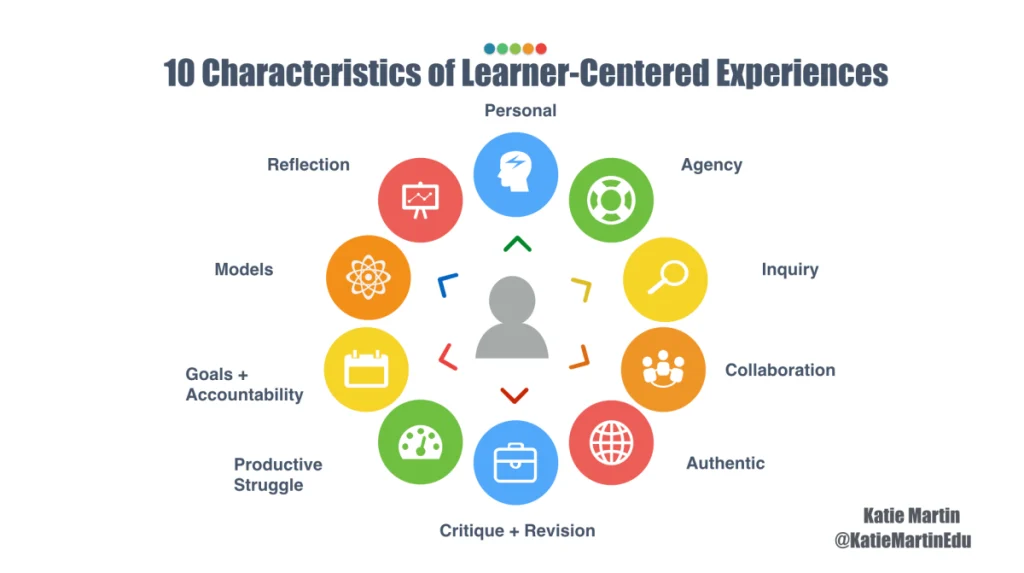
10 characteristics of learner-centered experiences
Resource

Summary
Learner-centered experiences are defined by ten key characteristics that prioritize the needs and interests of students. First, they promote active engagement, encouraging learners to participate in their own education through hands-on activities and discussions. Second, they foster collaboration, allowing students to work together and learn from one another. Third, they emphasize relevance, connecting learning to real-world contexts and personal experiences. Fourth, they support autonomy, giving learners choices in their educational paths. Fifth, they encourage critical thinking, prompting students to analyze, evaluate, and synthesize information. Sixth, they provide timely feedback, helping learners understand their progress and areas for improvement. Seventh, they recognize diverse learning styles, accommodating different preferences and abilities. Eighth, they create a safe and inclusive environment, where all students feel valued and respected. Ninth, they promote goal-setting, encouraging learners to set and pursue personal academic objectives. Finally, they integrate technology, utilizing digital tools to enhance learning and engagement. Together, these characteristics create a dynamic and supportive educational experience that empowers learners to take charge of their own learning journey.
Tags
#Learner-centered